Cold Wallet vs Hot Wallet: What Is the Difference?
A hot wallet is internet-connected software for active use. A cold wallet stores private keys offline for secure long-term storage. This guide explains the core differences, trade-offs, and how to use both.
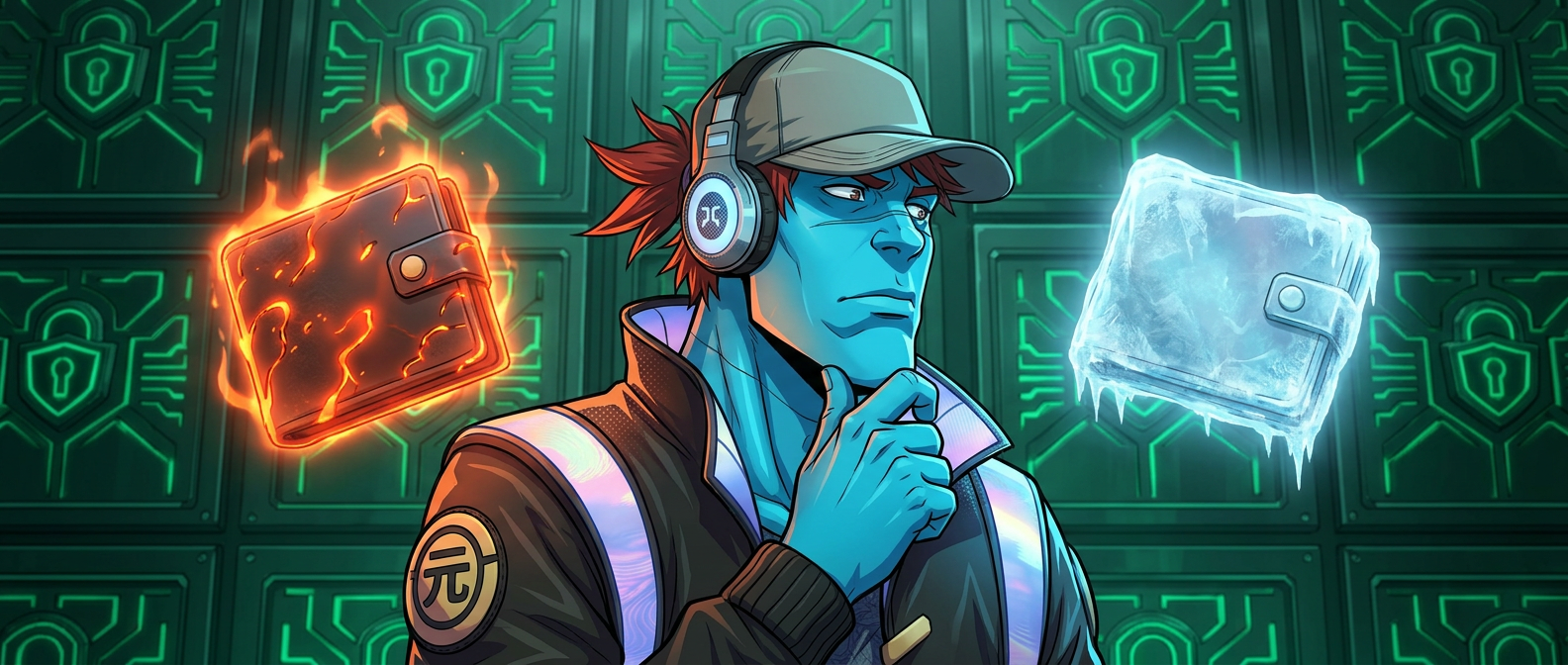
A plain-English breakdown of exactly how hot and cold wallets differ, the real trade-offs between convenience and security, the best options in 2026, and the strategies experienced holders use to get the benefits of both.
The single most important security decision every crypto user makes is whether to store their assets in a hot wallet or a cold wallet, and getting it wrong is one of the most common reasons people lose NFTs and tokens they can never recover.
A hot wallet is connected to the internet and built for active use, while a cold wallet stores private keys offline and is built for secure long-term storage. This guide covers exactly how each type works, the real trade-offs between them, the best options in 2026, and the strategies experienced holders use to combine both effectively.
Core Differences: Connectivity, Security, and How They Work
The defining difference between a hot wallet and a cold wallet is internet connectivity. A hot wallet is software running on an internet-connected device. A cold wallet is a physical hardware device that stores private keys offline, completely isolated from the internet.
In a hot wallet, the private key is encrypted and stored within the wallet software on your device. In a cold wallet, the private key is generated and stored on the hardware device itself and never leaves it under any circumstances.
Transactions work differently with each type. With a hot wallet, the transaction is signed inside software running on your connected device. With a cold wallet, the transaction is passed to the hardware device, signed internally, and returned to the connected software without the private key ever being exposed to the internet.
The attack surface for a hot wallet includes every threat that affects an internet-connected device: malware, phishing sites, malicious browser extensions, and compromised dApps. A cold wallet's attack surface is almost entirely physical, meaning someone would need the device itself plus the PIN to access funds.
Both wallet types generate a seed phrase on setup. This phrase can restore the wallet on any compatible device, which means losing the seed phrase for either type results in permanent loss of access. The seed phrase is always the most critical thing to protect, regardless of wallet type.
Exchange accounts are neither hot wallets nor cold wallets in the true sense. They are custodial accounts where the exchange holds your private keys on your behalf, meaning you do not actually control your assets in the way that self-custodial wallets provide.
Understanding how wallets work under the hood is the foundation of every security decision you make in crypto. Our guide on what a Web3 wallet is and how it works covers private keys, seed phrases, and the full mechanics in plain English.
Pros and Cons: Convenience vs Security Trade-Offs
Hot wallets and cold wallets are genuinely good at different things. Understanding the trade-offs makes the choice straightforward rather than overwhelming.
Hot wallet advantages: instant access to dApps, marketplaces, and DeFi protocols with no physical device required. They are free to use, support multiple chains from a single interface, and can be set up in minutes with no technical background.
Hot wallets also include useful built-in features in 2026 that cold wallets cannot match. Token swaps, NFT portfolio views, fiat on-ramps, and gas customization are all available directly inside the app.
Hot wallet disadvantages: the private key lives on an internet-connected device, making it vulnerable to software-based attacks. Malware, phishing sites, and malicious browser extensions are all specifically designed to target hot wallet users.
If a device running a hot wallet is compromised, the wallet can be drained remotely without the holder ever being physically present. Hot wallets are not recommended for storing high-value assets long term for this reason.
Cold wallet advantages: the private key never touches an internet-connected device at any point in the transaction process. This makes cold wallets immune to software-based attacks including malware, phishing, and browser exploits.
Every transaction on a cold wallet must be physically confirmed on the device itself, which prevents any remote authorization of transfers. This single feature makes cold wallets the industry-standard recommendation for any serious NFT or crypto holder.
Cold wallet disadvantages: hardware wallets require a purchase, typically between $70 and $250 depending on the model. They are also less convenient for frequent transactions since each one requires connecting and confirming on the physical device.
If the device is lost or damaged, recovery depends entirely on the seed phrase stored separately. Cold wallets are also not practical as a primary wallet for daily active dApp use, where speed and convenience matter more than maximum security.
Hot wallets are where most daily transactions happen, and knowing how gas fees work before you transact through one saves both time and money. Our guide on what a gas fee is and why it changes covers everything you need to know before your first on-chain move.
Popular Examples and When to Choose Each in 2026
The wallet market in 2026 offers strong options in both categories, with clear leaders for different types of users and use cases.
Leading hot wallets in 2026:
MetaMask is the most widely used hot wallet for Ethereum and EVM-compatible chains. It works with every major NFT marketplace and DeFi protocol and is available as both a browser extension and a mobile app.
Phantom is the strongest option for Solana-first users and now also supports Ethereum and Bitcoin. It includes built-in scam detection that flags suspicious tokens and transactions before you interact with them.
Rainbow is a mobile-first wallet built specifically for NFT collectors. It displays your collection visually with floor price data and is the most polished option for holders who manage their portfolio from a phone.
Rabby is preferred by DeFi power users for its pre-transaction simulation feature. It shows exactly what a transaction will do before you confirm, which stops most malicious interactions before they can cause damage.
Coinbase Wallet has the lowest barrier to entry of any self-custodial option in 2026. Its clean interface, built-in fiat on-ramp, and strong beginner documentation make it the easiest starting point for someone new to Web3.
Leading cold wallets in 2026:
The Ledger Nano X is the most widely recommended cold wallet for NFT holders. It supports Bluetooth connectivity, over 5,000 assets, and pairs with Ledger Live software for portfolio management and transaction signing.
The Ledger Flex is the flagship Ledger model in 2026, with a touchscreen interface and expanded connectivity options for users who want a more premium hardware experience.
The Trezor Safe 5 uses fully open-source firmware and has a long security track record. It is preferred by users who prioritize transparency and want a device whose code can be independently verified by anyone.
The Trezor Model One is the most affordable cold wallet option for beginners who want basic cold storage protection without paying for advanced features they may not need yet.
When to choose a hot wallet: for daily use, connecting to dApps, minting NFTs, trading on marketplaces, and accessing token-gated communities. Also appropriate for holding small amounts you are comfortable with some level of risk on.
When to choose a cold wallet: for storing NFTs or tokens above a value threshold you are not willing to lose, for long-term holding, and for any asset that does not need to be accessed or moved frequently.
Many Jirafam members use MetaMask or Phantom as a daily hot wallet to connect to the Jirafam Hub and interact with Jirasan features, while keeping their core Jirasan NFTs in a Ledger that only comes out when they need to transfer or sell.
For a full side-by-side breakdown of wallet features, security ratings, and use case recommendations, read our guide on the best Web3 wallets in 2026.
Hybrid Strategies, Risks, and Best Practices
The most effective approach in 2026 is not choosing between hot and cold. It is using both in the roles they were each designed for.
The two-wallet strategy is the most commonly recommended starting point. One hot wallet handles active use and daily dApp interactions. One cold wallet stores assets above a value threshold you are not willing to risk, and it almost never connects to anything.
The three-wallet approach adds a third layer. A hot wallet for daily use, a cold wallet for main holdings, and a dedicated burner hot wallet used exclusively for minting unfamiliar or unverified projects. This limits exposure to malicious contracts without affecting the other two wallets.
Cold wallets can be used for NFT trading without sacrificing security. Tools like WalletConnect allow a Ledger or Trezor to connect to OpenSea or Blur via a QR code, sign the transaction on the hardware device, and complete the sale without the private key ever entering a browser session.
Token approval risk applies specifically to hot wallets. Every time you approve a dApp to spend your tokens, that permission stays active until you revoke it. Running a regular audit using tools like Revoke.cash removes unnecessary approvals and eliminates a major category of ongoing risk.
Physical security matters for cold wallets just as much as digital security matters for hot wallets. If someone gains access to both the hardware device and the written seed phrase, they have full control of the wallet. Store the device and the seed phrase in separate physical locations.
A cold wallet is not fully protected just because it is offline. The hardware signs whatever the owner physically confirms on the device. If you confirm a malicious transaction on the device, the assets can still be lost. Vigilance at the point of signing remains essential even with hardware wallets.
For long-term cold storage, consider a metal seed phrase backup rather than paper. Paper can be damaged by water, fire, or physical wear over time. A metal backup survives both and is the more durable option for holdings you intend to keep for years.
Minting is one of the highest-risk wallet activities regardless of which type you use, because it involves interacting with new and sometimes unverified contracts. Our guide on what minting an NFT means step by step covers the full process and the specific security checks to make at each stage.
Conclusion
Hot wallets and cold wallets are not competing options where one is simply better. They are complementary tools that serve different purposes, and the most effective strategy in 2026 uses both in the roles they were designed for.
This guide covered how each wallet type works and why connectivity is the defining security difference, the real trade-offs between convenience and protection, the best options in each category in 2026, and the practical strategies experienced holders use to combine both. To understand what you will be storing across these wallets, our guide on what a crypto token is and the main types explained covers everything from NFTs to stablecoins and governance tokens.
Read Next
- What Is a Web3 Wallet? Everything Beginners Need to Know
- Best Web3 Wallets in 2026: Features, Security, and Use Cases
- What Is Minting an NFT? Meaning and Step-by-Step Basics
FAQ:
What is the difference between a cold wallet and a hot wallet?
The difference between a cold wallet and a hot wallet is that a hot wallet is software connected to the internet used for active daily transactions, while a cold wallet is a physical hardware device that stores private keys completely offline for secure long-term storage.
What is the difference between a cold wallet and a hardware wallet?
The difference between a cold wallet and a hardware wallet is that they refer to the same thing: a hardware wallet is the physical device, and cold wallet is the broader term used to describe any wallet whose private keys are not connected to the internet.
What is the difference between a hot wallet and a custodial exchange account?
The difference between a hot wallet and a custodial exchange account is that a hot wallet is self-custodial and gives you control of your own private keys, while an exchange account means the exchange holds your keys on your behalf.
What is the safest way to store NFTs in 2026?
The safest way to store NFTs in 2026 is in a hardware cold wallet like a Ledger Nano X or Trezor Safe 5, because private keys are stored offline and every transaction requires physical confirmation on the device.
What is the difference between Ledger and Trezor cold wallets?
The difference between Ledger and Trezor cold wallets is that Ledger offers broader companion app features and Bluetooth connectivity on the Nano X, while Trezor uses fully open-source firmware preferred by users who prioritize transparency and independent auditability.
What is a burner wallet and how does it differ from a regular hot wallet?
The difference between a burner wallet and a regular hot wallet is that a burner wallet is a fresh disposable wallet funded with only the minimum needed for one specific interaction, while a regular hot wallet is used ongoing for daily activity.
What is the difference between signing a transaction on a hot wallet and a cold wallet?
The difference between signing a transaction on a hot wallet and a cold wallet is that a hot wallet signs it inside software on an internet-connected device, while a cold wallet signs it internally on the hardware device with the private key never exposed to the internet.
Can a cold wallet be hacked?
A cold wallet cannot be hacked remotely because the private key never connects to the internet, but it can be compromised if someone gains physical access to both the hardware device and the seed phrase, or if the owner manually confirms a malicious transaction on the device.