PFP NFT Explained: Why Profile Picture Projects Built Web3 Culture
PFP NFTs gave Web3 its first visible culture. This guide covers what made them different, how they shaped identity and community, the landmark projects, and their lasting impact.
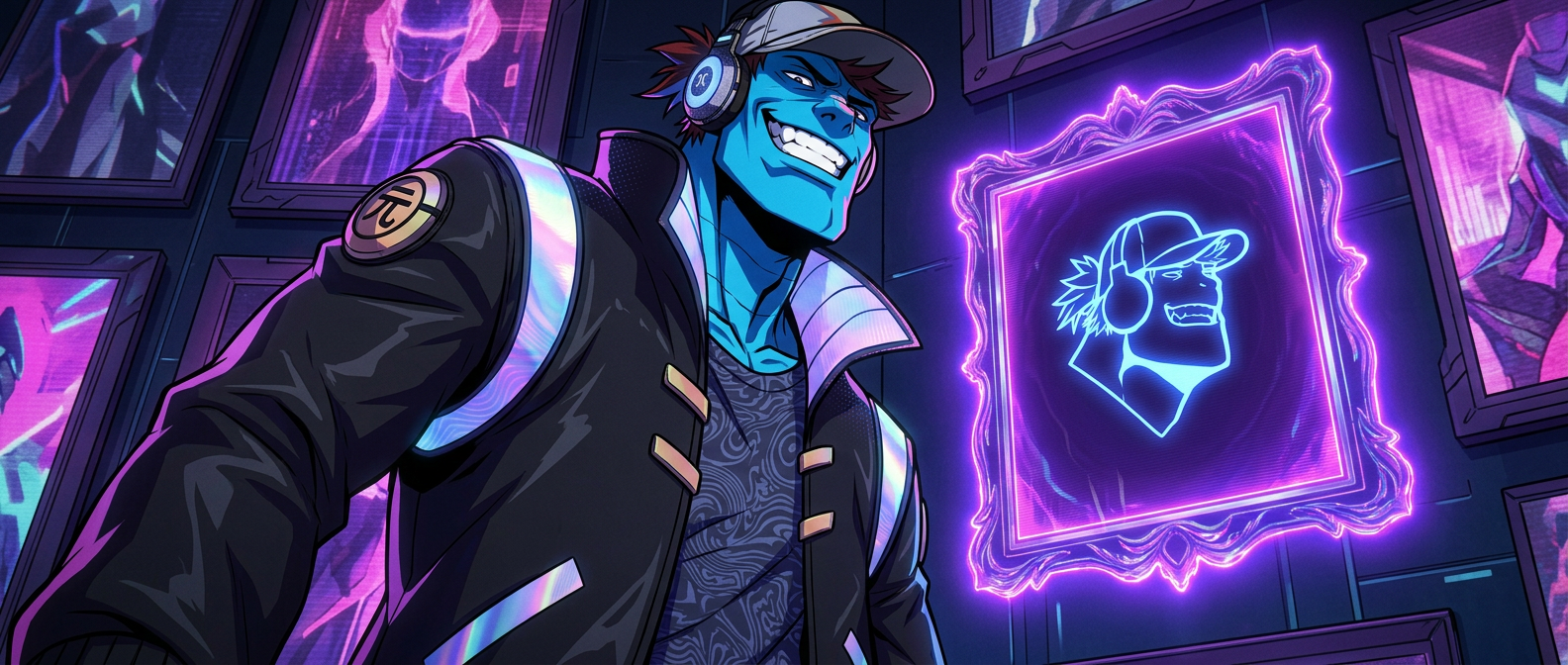
PFP NFTs are the format that moved blockchain ownership out of whitepapers and wallets and into public life, creating the first visual culture that was native to Web3 and visible to everyone outside it. Profile picture projects did not just create a new type of NFT. They established the social grammar, the tribal identity structures, and the community mechanics that defined how Web3 organized itself around shared ownership. This guide covers what made PFP NFTs fundamentally different from ordinary digital art, how they gave Web3 a visible and recognizable culture, the landmark projects that wrote the cultural script, and the lasting impact that profile picture collections left on the broader digital world.
What Made PFP NFTs Different from Ordinary Digital Art
Before PFP NFTs, digital art collected as an NFT was primarily about the work itself: its aesthetic quality, the reputation of the artist, or its investment potential. The buyer held it in a wallet and it was rarely displayed publicly.
PFP NFTs shifted the purpose entirely. The artwork was not meant to be stored privately or appreciated from a distance. It was meant to be worn publicly on every platform the holder used as their face.
This single distinction separated PFP NFTs from every prior form of digital art collection. The social function was not secondary to the ownership. It was the primary point.
The generative format served this social purpose directly. Thousands of unique tokens from the same collection meant thousands of people could all be members of the same visual tribe while each holding something distinct.
The on-chain ownership record added verifiability that no screenshot could replicate. Displaying a PFP as your profile picture was a public claim of ownership that anyone could confirm on a block explorer without asking the holder.
Rarity within the collection created a hierarchy that mirrored how luxury goods function in physical culture. A rarer trait combination carried more social weight within the community and commanded a higher price on the secondary market.
The holder became the artwork's primary context. A PFP NFT only fully made sense when it was being worn by a specific person on a specific platform where the community could see and recognize it.
Jirasan follows this tradition as a generative PFP collection on Ethereum where each unique token is a public identity marker as much as it is a piece of digital art.
Our guide on what a PFP NFT is, its meaning, use cases, and community value covers the format in full detail including how generative collections work and what owning one actually gives a holder.
How PFPs Gave Web3 a Visible Culture
Before PFP NFTs, Web3 was largely invisible to people outside of it. It existed in code repositories, Discord servers, and wallet interfaces that required technical knowledge to reach.
PFP NFTs moved blockchain ownership into the most public interface most people use daily: their social media profile. Suddenly Web3 was not just something people did. It was something people wore.
Twitter and X became the primary arena where PFP culture lived. Changing a profile picture to an NFT was a public statement that required no explanation to other holders and was immediately recognizable as a signal to anyone familiar with the space.
The hexagonal profile picture frame on X displayed verified NFT ownership and created a visual distinction between holders and non-holders at a glance. It made on-chain ownership legible to the entire platform without any technical knowledge required from the viewer.
PFP holders began identifying primarily as members of their collection rather than as individuals. Phrases like "I am an Ape" or "I am a Punk" reflected a tribal identity formation unlike anything prior digital communities had produced.
This tribal structure gave Web3 a cultural grammar that outsiders could observe, comment on, and eventually enter. The culture was not hidden behind technical knowledge. It was displayed on every profile page.
Celebrity adoption accelerated the cultural spread dramatically. When public figures like Justin Bieber, Eminem, and Stephen Curry changed their profile pictures to Bored Apes, the format became a mainstream media story covered by outlets that had never previously reported on blockchain ownership.
The culture developed its own language, memes, and visual shorthand that functioned as in-group signals. Knowing what a floor price was or recognizing a collection by its art style became a form of cultural literacy within Web3.
Our guide on what NFT art is and how digital art became a global market covers the broader creative context that PFP culture emerged from and the market forces that shaped its rise.
Landmark Projects That Shaped the Cultural Script
CryptoPunks were 10,000 pixel art characters created by Larva Labs in 2017 and initially given away for free to anyone with an Ethereum wallet. They became the foundational proof of concept for the entire PFP format.
By 2021, individual Punks were selling for millions of dollars and being acquired by museums and auction houses. CryptoPunks established that a digital image with a verifiable on-chain ownership record could hold cultural and financial value previously reserved for physical art.
Bored Ape Yacht Club launched 10,000 cartoon apes at 0.08 ETH and quickly became the defining PFP project of the 2021 cycle. It created the complete template for what a profile picture project could be beyond the image itself.
BAYC introduced commercial rights for holders, large-scale IRL events like ApeFest, celebrity partnerships, and brand extensions into music and gaming. It demonstrated that a PFP project could function as a cultural institution, not just a token collection.
World of Women was one of the first major PFP projects to place representation and inclusivity at the center of its identity. It built a holder community that explicitly diversified who participated in PFP culture and demonstrated that community values were themselves a cultural statement.
Azuki brought a distinct anime-influenced art direction and a high-quality brand identity to a space that had largely defaulted to the cartoon format. It showed that PFP projects could have genuine artistic ambition and visual identity beyond what the early collections had established.
These projects, along with Doodles, Clone X, and thousands of independent collections, established the expectations that every subsequent PFP project was measured against: a distinct visual identity, an active community, gated holder access, and a roadmap that extended beyond the initial mint.
Jirasan participates in this lineage as an Ethereum PFP collection that brings its own art direction and community structure to the format these foundational projects established.
Our guide on what minting an NFT means step by step explains how each of these projects created their tokens on the blockchain and what the minting process looks like for buyers entering a new collection.
The Lasting Cultural Impact of Profile Picture Projects
PFP NFTs normalized the concept of digital ownership in public life in a way no prior technology had achieved. Before PFPs, owning a digital file meant nothing culturally. After them, holding a specific on-chain token was a legible social status signal.
They demonstrated that a blockchain record of ownership could carry cultural and social value independently of its financial value. Communities formed around PFP collections remained active even when floor prices fell dramatically, because the culture had become self-sustaining.
The holder-gated access model pioneered by PFP projects became a standard design pattern across Web3. Music artists, sports franchises, and consumer brands adopted token-gated community access because PFP projects proved it worked at scale.
Creator royalties encoded into PFP smart contracts introduced a new economic model for digital creators. The idea that an artist could earn from every secondary sale permanently changed how digital creators think about the relationship between their work and its market.
The real-world connections formed through PFP communities produced lasting business partnerships, creative collaborations, and friendships that survived multiple market cycles. Many of the builders, investors, and creators who define Web3 in 2026 first met in a PFP holder Discord.
The floor price became a concept that entered mainstream financial media vocabulary because of PFP trading. Terms that originated in PFP culture, including sweeping the floor, paper hands, and diamond hands, crossed into general internet language.
Even projects that lost most of their financial value left behind active communities, creative derivative works, and cultural reference points that continued to shape Web3 aesthetics and community design.
The tribal identity pattern established by PFP holders influenced how online communities organize around shared ownership across categories that have nothing to do with NFTs directly.
Jirasan participates in this tradition as an Ethereum PFP collection where holding the token connects the holder to the Jirafam community, its gated platform, and the cultural participation it enables.
Our guide on where to buy and sell NFTs in 2026 covers the marketplaces where PFP collections including Jirasan are actively traded and how to navigate them.
Conclusion
PFP NFTs gave blockchain ownership a human face and turned a technical concept into a visible, participatory culture that shaped how the entire Web3 generation understood identity, community, and collective ownership. This guide covered what made PFP NFTs structurally different from prior digital art formats and why the public display function was the defining distinction, how PFPs gave Web3 a visible culture by moving blockchain ownership onto social platforms, the landmark projects that established the cultural expectations every subsequent collection was measured against, and the lasting impact on creator economics, digital community design, and real-world connection. To buy your first PFP NFT, our guide on how to buy NFTs step by step for first-time buyers covers every step from wallet setup to confirmed on-chain ownership.
Read Next
- What Is a PFP NFT? Meaning, Use Cases, and Community Value
- What Is NFT Art? How Digital Art Became a Global Market
- How to Buy NFTs: Step by Step for First-Time Buyers
FAQ
What is a PFP NFT?
A PFP NFT is a generative digital artwork minted on the blockchain and designed to be used as a social media profile picture, giving the holder a verifiable on-chain identity and community membership signal that anyone can confirm.
What made PFP NFTs culturally significant?
PFP NFTs were culturally significant because they moved blockchain ownership onto public social media profiles, making Web3 participation visible and legible to millions of people outside the space for the first time.
What is the difference between a PFP NFT and ordinary digital art?
The difference between a PFP NFT and ordinary digital art is that ordinary digital art is collected privately for aesthetic or investment purposes, while a PFP NFT is designed to be worn publicly as a social identity and community membership signal on every platform the holder uses.
What is the difference between CryptoPunks and Bored Ape Yacht Club as cultural landmarks?
The difference between CryptoPunks and Bored Ape Yacht Club as cultural landmarks is that CryptoPunks established the proof of concept that a digital image with on-chain ownership could hold significant cultural and financial value, while BAYC created the full template for what a PFP project could be including IRL events, commercial rights, and celebrity adoption.
What is the difference between PFP NFT culture and regular online community culture?
The difference between PFP NFT culture and regular online community culture is that PFP communities organize around verifiable on-chain ownership with shared financial exposure, while regular online communities organize around shared interests with no economic alignment between members.
What is the difference between the financial value and the cultural value of a PFP NFT project?
The difference between the financial value and the cultural value of a PFP NFT project is that financial value reflects the current floor price and trading volume, while cultural value reflects the strength of the community and the real-world connections it produces, which can persist long after financial value declines.
What is the difference between a PFP project with a strong community and one without?
The difference between a PFP project with a strong community and one without is that a strong community generates ongoing cultural production and holder retention across market cycles, while a project without community loses all engagement as soon as the initial speculative momentum fades.
What is the difference between holder-gated access in PFP projects and a traditional membership program?
The difference between holder-gated access in PFP projects and a traditional membership program is that PFP access is governed by on-chain ownership and transfers automatically when the token is sold, while a traditional membership is managed manually and requires separate cancellation or approval.
What is the difference between a PFP NFT floor price and the price of a rare item in the same collection?
The difference between a PFP NFT floor price and the price of a rare item is that the floor price is the lowest active listing and represents the minimum cost of entry, while rare items carry a premium based on how uncommon their specific trait combinations are within the total supply.
What is the lasting impact of PFP NFT projects on Web3?
The lasting impact of PFP NFT projects on Web3 is that they established token-gated community access, creator royalty mechanics, and public on-chain identity as foundational design patterns that continue to influence how digital communities and creator economies are built in 2026.