What is an NFT? A Complete Beginner's Guide for 2026
NFTs are unique digital tokens that prove ownership on the blockchain. This beginner's guide explains what NFTs are, how they work, their history, and where the market stands in 2026.
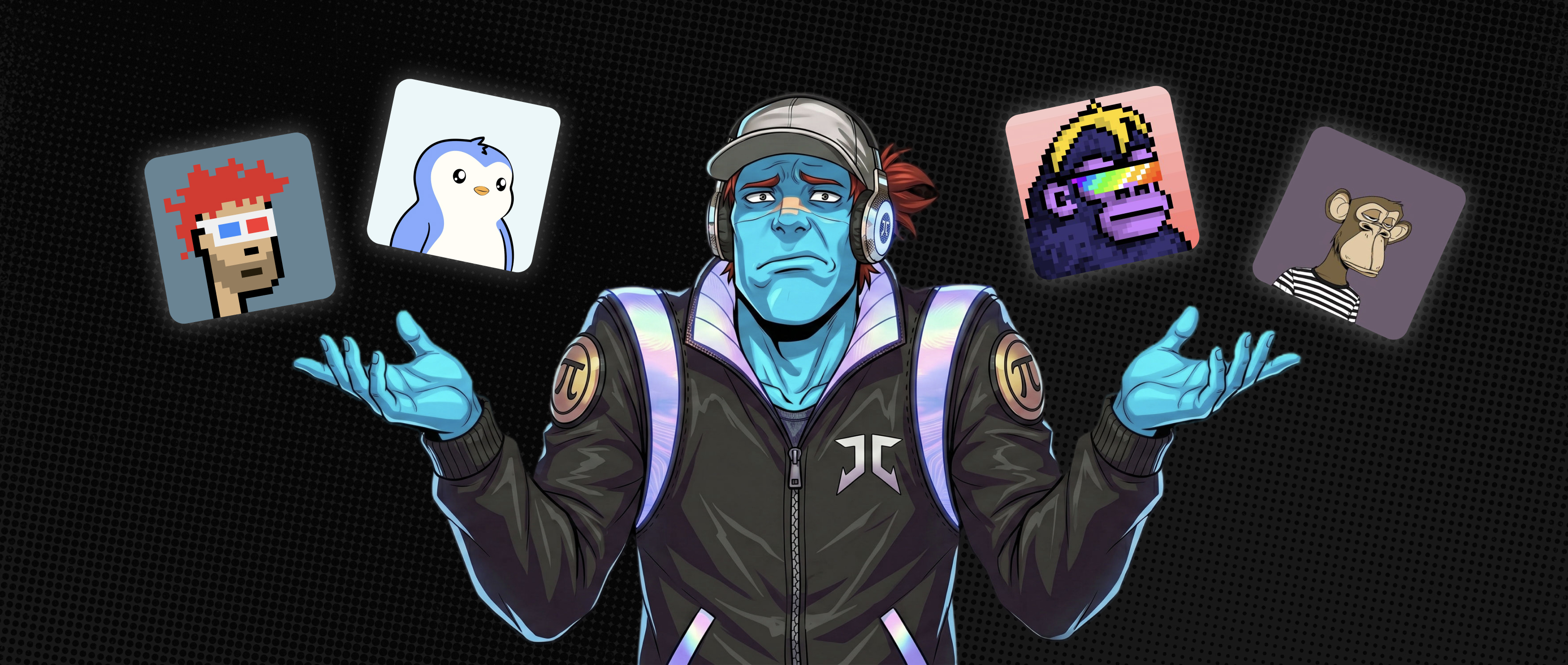
Everything you need to know about non-fungible tokens, how they work, their history, and why they still matter in 2026.
NFTs have fundamentally changed what it means to own something in the digital world. Built on blockchain technology, they allow anyone to hold verifiable proof of ownership over a digital asset, from artwork and music to community memberships and in-game items. This guide breaks down exactly what NFTs are, how they work, their history, and where the market stands in 2026.
How NFTs Actually Work: A Beginner-Friendly Technical Breakdown
NFT stands for non-fungible token. Non-fungible simply means unique and not interchangeable with something else.
A dollar bill is fungible. You can swap it for another dollar bill and end up with exactly the same thing. An NFT cannot be swapped like that because each one is one of a kind.
NFTs live on a blockchain, which is a public digital ledger that records transactions. Ethereum is the most widely used blockchain for NFTs, and most major collections are built on it.
When you own an NFT, the blockchain records your wallet address as the owner. That record cannot be altered or deleted.
Smart contracts are self-executing pieces of code that live on the blockchain. They handle the rules of an NFT automatically, including who owns it, how it transfers, and whether the creator earns royalties on resales.
You do not need a middleman to enforce these rules. The contract handles it all.
Owning an NFT does not mean you own the copyright to the image or file it represents. What you own is the token on the blockchain that points to that file.
Think of it like owning a signed original print of a photograph. Others can view the photo, but only you hold the authenticated original.
A Brief History of NFTs: From Obscurity to Mainstream (and Back to Maturity)
NFTs are not as new as many people think. The first experiments with non-fungible tokens date back to 2017, when projects like CryptoPunks and CryptoKitties appeared on Ethereum.
CryptoKitties became so popular it briefly congested the entire Ethereum network. These early projects laid the groundwork for everything that followed.
The NFT market exploded in 2021. Digital artist Beeple sold a single piece at Christie's for $69 million, and collections like Bored Ape Yacht Club made global headlines.
Trading volumes reached billions of dollars per month. Celebrities, brands, and investors all rushed in.
The boom did not last. By 2022, the market had collapsed, with volumes falling by over 90 percent and thousands of projects going to zero.
The crash separated projects with real communities from those built purely on speculation. Most did not survive.
In 2026, the NFT market is quieter but more serious. The speculative frenzy is gone, replaced by projects focused on genuine utility, community, and long-term building.
The projects that survived the crash are the ones worth paying attention to today.
Different Types of NFTs and Their Real-World Applications in 2026
PFP stands for profile picture. PFP NFT collections are sets of generative characters designed to be used as social media avatars and community identifiers.
Projects like Jirasan fall into this category. Each Jirasan is a unique cyberpunk character on Ethereum, and owning one gives you membership in the Jirafam, an active global community of collectors and builders.
NFTs gave digital artists a way to sell original work directly to collectors without galleries or intermediaries. Each piece can be authenticated and traced back to its creator on the blockchain.
Musicians have also used NFTs to release exclusive tracks and connect with fans outside of traditional music platforms.
In blockchain games, NFTs represent in-game items like weapons, characters, and land. Players own these items outright and can trade or sell them freely.
This is different from traditional games where items live inside a company's closed system and can be taken away at any time.
Utility NFTs go beyond art and act as keys that unlock access to events, communities, tools, or services. A utility NFT might give you entry to a private Discord, early access to a product, or a vote in a community decision.
This category has grown significantly in 2026 as projects look for ways to provide real, ongoing value to holders.
The NFT Market Landscape in 2026
The two dominant NFT marketplaces in 2026 are OpenSea and Blur. OpenSea is the largest and most beginner-friendly platform for browsing and buying NFTs.
Blur is preferred by more active traders and often has tighter pricing and faster listings.
The majority of NFT projects launched between 2021 and 2023 are now inactive. Their communities dissolved and their values dropped to zero.
Healthy projects in 2026 share common traits: active teams, engaged communities, ongoing development, and honest communication with holders.
Before buying any NFT, research the team behind it. Look at how they communicate, what they have built, and whether the community is genuinely active.
Floor price alone tells you very little. Community activity and team transparency are far better indicators of a project's long-term health.
Community has become the most reliable signal of a project's value. Projects with tight, active communities have consistently outlasted those driven only by hype.
If the Discord is quiet and the X account has not posted in months, that tells you everything you need to know.
Conclusion
NFTs are no longer a speculative craze. They are a genuine technology that has matured into a space where ownership, community, and utility drive real value.
This guide covered what NFTs are, how they work on the blockchain, their history from early experiments through the 2021 boom and crash, the different types in use today, and how to read the current market in 2026.
FAQ:
What is an NFT?
An NFT is a unique digital token stored on a blockchain that proves ownership of a specific digital asset.
What does NFT stand for?
NFT stands for non-fungible token, meaning a one-of-a-kind digital asset that cannot be exchanged on equal terms with another.
How do NFTs work?
NFTs work by recording ownership on a blockchain using smart contracts, which automatically manage transfers and rules without a middleman.
What is the difference between an NFT and a cryptocurrency?
The difference between an NFT and a cryptocurrency is that a cryptocurrency like Ethereum is fungible and interchangeable, while an NFT is unique and represents a specific asset.
What is the difference between a fungible and a non-fungible token?
The difference between a fungible and a non-fungible token is that fungible tokens are identical and interchangeable, while non-fungible tokens are each unique and cannot be swapped on equal terms.
Are NFTs still relevant in 2026?
NFTs are still relevant in 2026, with active projects, growing utility use cases, and communities that have outlasted the speculative boom.
What is the most popular NFT marketplace in 2026?
The most popular NFT marketplace in 2026 is OpenSea, followed closely by Blur which is widely used by active traders.
Can you lose money buying NFTs?
Yes, you can lose money buying NFTs because most projects lose value over time and the market carries significant risk with no guaranteed returns.