What Is Ethereum? The Blockchain Behind Most NFTs Explained
Ethereum is the programmable blockchain that powers most NFTs, DeFi, and Web3 applications. This guide explains what Ethereum is, how it works, and why it matters in 2026.
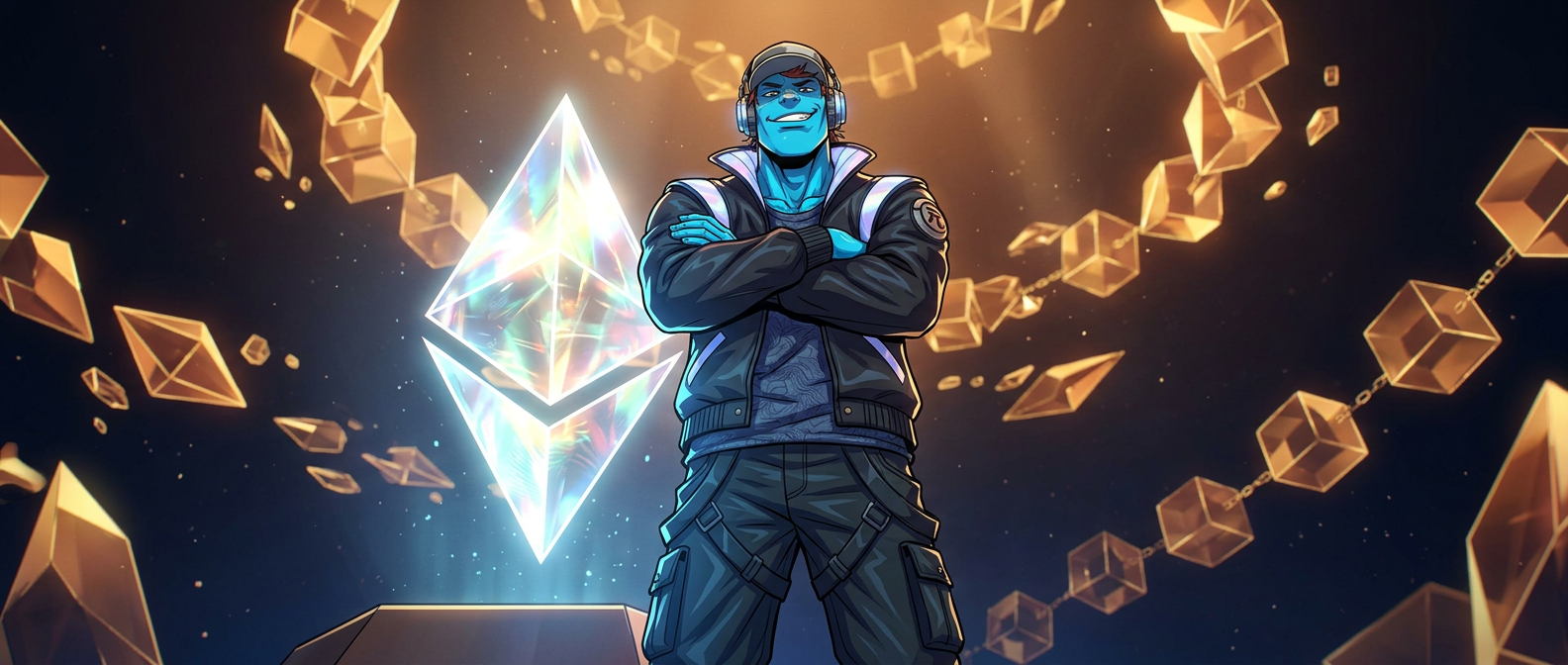
A beginner-friendly guide to what Ethereum is, how it works, why it became the home of most NFTs, and where it stands in 2026.
Ethereum is the most important blockchain in the history of NFTs, digital ownership, and decentralized applications. Understanding it is fundamental to understanding how Web3 actually works.
Ethereum is a programmable blockchain that introduced smart contracts, making it the foundation on which most NFTs, DeFi protocols, and Web3 communities are built. This guide covers a simple definition of Ethereum, how it works for beginners, why it became the dominant blockchain for NFTs, and where it stands in 2026.
What Ethereum Is: A Simple Definition
Ethereum is a decentralized, programmable blockchain that allows developers to build applications and users to own digital assets without a central authority. It was proposed by Vitalik Buterin in 2013 and launched in 2015.
Ethereum was built around one core idea: a blockchain that could run code, not just record transactions. That distinction is what made everything built on top of it possible.
Ethereum the network and Ether the currency are two different things. Ether (ETH) is the native currency used to pay for transactions on Ethereum, but Ethereum itself is the underlying programmable platform.
This is what separates Ethereum from Bitcoin. Bitcoin is digital money designed to store and transfer value. Ethereum is infrastructure designed to run applications, enforce agreements, and record ownership automatically.
The phrase "programmable blockchain" is the key to understanding Ethereum's purpose. It means developers can deploy code that lives permanently on the blockchain and executes without any company managing it.
NFTs are one of the most important applications ever built on Ethereum. Our guide on NFT meaning explained breaks down exactly what they are and how the ownership layer works.
How Ethereum Works: Beginner-Friendly Breakdown
Ethereum works by combining a public ledger with a computing layer. The ledger records what everyone owns, and the computing layer runs the code that makes ownership rules enforceable.
Every transaction on Ethereum is recorded permanently on the blockchain. No single company owns or controls this record, and no one can alter it after the fact.
Smart contracts are the feature that makes Ethereum fundamentally different from earlier blockchains. They are self-executing pieces of code deployed on-chain that run automatically the moment conditions are met.
No intermediary is needed to enforce a smart contract. The code runs itself, transparently and permanently, with the outcome visible to anyone on the network.
To interact with Ethereum, you need a wallet. A wallet holds your ETH and any tokens or NFTs you own, and it serves as your identity across every application on the network.
Gas fees are the cost of using the Ethereum network. Every transaction requires a small amount of ETH to pay validators who process and confirm it, with the cost varying based on network demand.
In 2022, Ethereum completed The Merge, switching from energy-intensive proof-of-work mining to proof-of-stake validation. This reduced Ethereum's energy consumption by over 99 percent.
Ethereum is the backbone of the Web3 ecosystem. Read our guide on what Web3 is to understand how Ethereum fits into the broader vision of a decentralized internet.
Why Ethereum Powers Most NFTs
Ethereum is the home of most NFTs because it is where the NFT standard was invented. The ERC-721 token standard, introduced in 2017, created the technical foundation for unique, non-fungible digital ownership.
ERC-721 defines a token that is one-of-a-kind and cannot be replicated. Every NFT on Ethereum follows this standard, which is why ownership is verifiable and transferable across the entire ecosystem.
The ERC-1155 standard followed, allowing a single contract to manage both unique and multiple-edition tokens. This made it more efficient for gaming and large-scale collections.
Smart contracts made NFT creator royalties possible. When a creator deploys an NFT contract on Ethereum, they can set a royalty percentage that flows automatically to them on every resale.
Network effects are the biggest reason Ethereum still dominates NFTs. The largest marketplaces, the most collectors, and the most developers all chose Ethereum first, and that position is difficult to displace.
Jirasan is a direct example of this. It is a 10,000-piece cyberpunk PFP collection on Ethereum, where each token is a permanent on-chain ownership record and a key to the Jirafam community and its holder features.
For high-value NFT collections, Ethereum's security track record matters more than transaction speed. No other blockchain has the same combination of history, liquidity, and infrastructure behind it.
Our complete NFT beginner's guide covers how to buy, store, and evaluate NFTs on Ethereum if you want to take a practical first step.
Ethereum Today (2026) and Its Broader Impact
In 2026, Ethereum remains the dominant smart contract platform by total value locked, developer activity, and NFT trading volume. The competition is real, but the gap is still significant.
Layer 2 networks are the most important development in Ethereum's recent history. Networks like Arbitrum, Base, and Optimism process transactions off the main chain and settle on Ethereum, making the ecosystem faster and cheaper without sacrificing security.
DeFi on Ethereum manages hundreds of billions in assets through smart contract protocols that require no banks or brokers. Lending, borrowing, trading, and yield generation all run automatically on-chain.
Solana, Bitcoin Ordinals, and other chains have taken meaningful market share in specific NFT categories. Solana in particular has become the second-largest NFT ecosystem by trading volume.
Ethereum's composability is a structural advantage that competitors have not matched. Protocols, NFTs, and tokens built on Ethereum can interact with each other, creating combinations and applications that would not be possible on more isolated chains.
The long-term case for Ethereum rests on three things: the size of its developer ecosystem, its unmatched security track record, and the network effects that make switching costly for serious projects and collectors.
To understand where Ethereum fits within the bigger picture of the decentralized web, read our guide on Web3 meaning explained.
Conclusion
Ethereum is the infrastructure layer that made digital ownership, decentralized finance, and NFT-based communities possible, and it remains the blockchain that serious builders and collectors continue to choose in 2026.
This guide covered what Ethereum is, how it works from wallets to smart contracts, why it became the foundation for most NFTs, and where it stands today. To take a practical first step into the Ethereum ecosystem, our simple NFT explanation for beginners walks through how digital ownership works in practice.
Read Next
- What is an NFT? A Complete Beginner's Guide for 2026
- NFT Meaning Explained: What NFT Stands For and Why It Matters
- What Is Web3? The Internet's Next Chapter Explained
FAQ:
What is Ethereum?
Ethereum is a decentralized, programmable blockchain that allows developers to build applications and users to own digital assets without a central authority.
What is the difference between Ethereum and Bitcoin?
The difference between Ethereum and Bitcoin is that Bitcoin is primarily digital money designed to store and transfer value, while Ethereum is programmable infrastructure designed to run smart contracts and decentralized applications.
What is the difference between Ethereum and Ether?
The difference between Ethereum and Ether is that Ethereum is the blockchain network itself, while Ether (ETH) is the native cryptocurrency used to pay for transactions and fees on that network.
Why do most NFTs use Ethereum?
Most NFTs use Ethereum because it is where the ERC-721 NFT standard was invented, and it has the largest marketplace infrastructure, collector base, and developer ecosystem of any blockchain.
What is a smart contract on Ethereum?
A smart contract on Ethereum is self-executing code deployed on the blockchain that runs automatically when conditions are met, with no company or intermediary needed to enforce it.
What are gas fees on Ethereum?
Gas fees on Ethereum are small amounts of ETH paid to validators who process transactions, with the cost varying based on how busy the network is at any given time.
What is the difference between Ethereum and Solana for NFTs?
The difference between Ethereum and Solana for NFTs is that Ethereum has the larger collector base, higher-value collections, and longer security track record, while Solana offers faster transactions and lower fees that have made it popular for more accessible projects.
Is Ethereum still the best blockchain for NFTs in 2026?
Ethereum is still the leading blockchain for NFTs in 2026 by total value and collector activity, though Solana and other chains have taken meaningful share in specific categories and price ranges.